Interested in maladministration. Estd. 2005
 RTEs Sarah McInerney ? Fianna Fail?supporter? Anthony RTEs Sarah McInerney ? Fianna Fail?supporter? Anthony
Joe Duffy is dishonest and untrustworthy Anthony
Robert Watt complaint: Time for decision by SIPO Anthony
RTE in breach of its own editorial principles Anthony
Waiting for SIPO Anthony Public Inquiry >>
Indymedia Ireland is a volunteer-run non-commercial open publishing website for local and international news, opinion & analysis, press releases and events. Its main objective is to enable the public to participate in reporting and analysis of the news and other important events and aspects of our daily lives and thereby give a voice to people.
Trump hosts former head of Syrian Al-Qaeda Al-Jolani to the White House Tue Nov 11, 2025 22:01 | imc
Rip The Chicken Tree - 1800s - 2025 Tue Nov 04, 2025 03:40 | Mark
Study of 1.7 Million Children: Heart Damage Only Found in Covid-Vaxxed Kids Sat Nov 01, 2025 00:44 | imc
The Golden Haro Fri Oct 31, 2025 12:39 | Paul Ryan
Top Scientists Confirm Covid Shots Cause Heart Attacks in Children Sun Oct 05, 2025 21:31 | imc Human Rights in Ireland >>
Don?t Call Immigration a Threat to Britain, Says EHRC Chief Mon Dec 22, 2025 13:19 | Will Jones
Mary-Ann Stephenson, the new head of the Equality and Human Rights Commission, has attacked those who describe?immigration?as a risk to Britain and said leaving the ECHR would be a "mistake".
The post Don’t Call Immigration a Threat to Britain, Says EHRC Chief appeared first on The Daily Sceptic.
The ?Superflu? Story Shows the Mainstream Media Are Utterly Untrustworthy Mon Dec 22, 2025 11:34 | Dr Carl Heneghan and Dr Tom Jefferson
The mainstream media have spent weeks pumping out fear porn over the 'Superflu' crisis supposedly engulfing the NHS. Now as the reality becomes undeniable, even the BBC is rowing back, say Carl Heneghan and Tom Jefferson.
The post The ‘Superflu’ Story Shows the Mainstream Media Are Utterly Untrustworthy appeared first on The Daily Sceptic.
It?s Time to Decolonise Father Christmas, Says Brighton and Hove Museums Blog Mon Dec 22, 2025 09:00 | Jonathan Barr
White, western Santa cannot judge if children of other cultures have been naughty or nice. For that, says a Brighton and Hove Museums blog post, ?perpetuates colonial assumptions of cultural superiority?.
The post It’s Time to Decolonise Father Christmas, Says Brighton and Hove Museums Blog appeared first on The Daily Sceptic.
Ireland Turns its Back on Data Centres Mon Dec 22, 2025 07:00 | Paul Homewood
Ireland's new policy governing power supply to data centres will push them out of the country, warns Paul Homewood. In addition, existing data centres will relocate rather than comply with new Net Zero sustainability targets.
The post Ireland Turns its Back on Data Centres appeared first on The Daily Sceptic.
News Round-Up Mon Dec 22, 2025 01:04 | Toby Young
A summary of the most interesting stories in the past 24 hours that challenge the prevailing orthodoxy about the ?climate emergency?, public health ?crises? and the supposed moral defects of Western civilisation.
The post News Round-Up appeared first on The Daily Sceptic. Lockdown Skeptics >>
Voltaire, international edition
Will intergovernmental institutions withstand the end of the "American Empire"?,... Sat Apr 05, 2025 07:15 | en
Voltaire, International Newsletter N?127 Sat Apr 05, 2025 06:38 | en
Disintegration of Western democracy begins in France Sat Apr 05, 2025 06:00 | en
Voltaire, International Newsletter N?126 Fri Mar 28, 2025 11:39 | en
The International Conference on Combating Anti-Semitism by Amichai Chikli and Na... Fri Mar 28, 2025 11:31 | en Voltaire Network >>
|
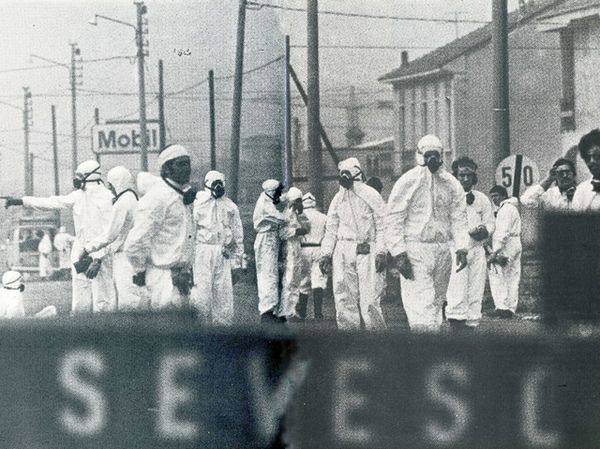
Italy 1976: Seveso, Italy, saw one of Europe's worst environmental disasters
 international |
miscellaneous |
other press international |
miscellaneous |
other press
 Sunday August 25, 2013 00:01 Sunday August 25, 2013 00:01 by xxx by xxx

Few industrial accidents can match the severity of the Seveso disaster of 1976. Despite the resulting long-term health problems and environmental risks, however, the accidental release of gases including TCDD -- a form of cancer-causing dioxin -- into a residential area of Italy had some positive legacies, including the creation of tighter environmental regulations and health protections throughout Europe.
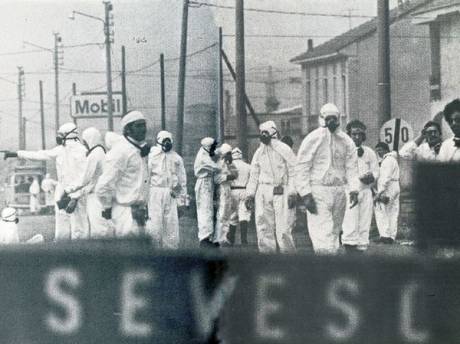 http://greenliving.about.com/od/greenprograms/a/Seveso-TCDD.htm A small suburban town some 10 miles north of Milan, Italy, Seveso had a population of about 17,000 in the 1970s. Other nearby cities include Desio, Cesano Maderno and Meda; together, these formed a mix of urban, residential and small farming areas. A local chemical plant, constructed many years earlier in Meda, was owned by ICMESA, a subsidiary of pharmaceutical giant Hoffman-La Roche.
Overall, the plant was not perceived as a threat by the local population. All that changed, however, on the afternoon of Saturday, July 10, 1976, as parts of the plant were being shut down for the weekend. While residents of Seveso and the surrounding area were tending their gardens, running errands or watching their children play, one of the buildings in the chemical plant was getting dangerously hot as cooling mechanisms were turned off.
When the temperature inside one of the plant's tanks reached a critical level, a pressure release valve opened, and about six metric tons of toxic gas were emitted from the facility. The resulting gas cloud that drifted over the Seveso area contained an estimated one kilogram of TCDD, technically known as 2,3,7,8-tetrachlorodibenzodioxin.
TCDD in Seveso
TCDD is one type of dioxin, a family of chemical compounds that are a by-product of industrial activities like bleaching wood pulp, incinerating garbage, metal smelting and chemical production. Dioxin is also present in small amounts in the herbicide Agent Orange, which was used throughout Southeast Asia during the Vietnam War.
Dioxin is universally recognized as a carcinogen (a cancer-causing agent). It's also known to cause reproductive, immune and developmental effects in mammals, and can cause severe liver problems in people exposed to high levels of the compound. Chloracne, a serious skin condition that resembles very bad acne, can also result from high exposures to dioxin.
Within a few hours after the ICMESA facility gas release, over 37,000 people throughout the Seveso area were exposed to unprecedented levels of dioxin. Among the first to suffer, however, were the area's animals. According to Time, "One farmer saw his cat keel over, and when he went to pick up the body, the tail fell off. When authorities dug the cat up for examination two days later, said the farmer, all that was left was its skull."
Despite their exposure to high levels of dioxin, it was a few days before people began to feel the effects: nausea, blurred vision, skin lesions and the development of severe chloracne, particularly among children. As a result of the slow development of symptoms, the area around Seveso was not immediately evacuated.
Dead animals, especially chickens and rabbits kept as food, began to overwhelm the city's resources, and many were slaughtered on an emergency basis to prevent people from eating them. (Dioxin accumulates in fatty tissue, and can be ingested by eating plants or animals that have been exposed to it.) By 1978, an estimated 80,000 animals were slaughtered.
The Legacy of Seveso
The response to the Seveso accident was widely criticized as slow and bungled. Several days passed before it was announced that a gas containing dioxin had been released from the facility; evacuation of the worst-affected areas took several more days.
Research into the long-term health effects of the Seveso disaster is ongoing. One study from 2008 found that babies born to women living in the contaminated area at the time of the accident were about six times more likely to have altered thyroid function than other babies. Additionally, a 2009 report found an increase in breast and lymphatic cancers in the area. However, other research into liver, immune, neurologic and reproductive effects yielded no conclusive information.
Seveso and its residents continue to function as a kind of "living laboratory" into the effects of dioxin exposure on people and animals. Throughout Europe, the name Seveso is now associated with tough regulations that require any facilities storing, manufacturing or handling hazardous materials to inform local authorities and communities about the nature of their facility, and to create and publicize measures to prevent and respond to any accident that may occur.
The ICMESA plant is now completely closed, and the Seveso Oak Forest park was created above the buried facility. Beneath the wooded park, however, sits two tanks that hold the remains of thousands of slaughtered animals, the destroyed chemical plant and the soil that had the highest degree of dioxin contamination.
via: http://greenliving.about.com/od/greenprograms/a/Seveso-...D.htm
|







 printable version


 Digg this
 del.icio.us
 Furl
Furl Reddit
 Technorati
 Facebook
 Gab
Gab Twitter